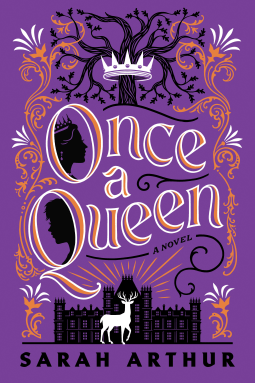
Once a Queen is a portal fantasy. Or maybe it might be better said that it’s a fantasy novel about Portal Fantasies. Our Protagonist, a young girl named Eva goes on a trip with her mother to England to visit her grandmother. (Her very rich grandmother who lives on an estate with extremely extravagant topiaries that tend to attract tourists.)
On arrival, it soon becomes apparent that Eva’s mother and grandmother have a very strained relationship. It also becomes apparent that the entire estate is mildly to extremely obsessed with a portal fantasy novel from the 1940s called Ternival: Selected Tales. A book everyone seems to believe describes real events. The only person who doesn’t believe seems to be Eva’s grandmother. (Who it turns out is a queen of Ternival.)
Eva is drawn into the mysteries surrounding the state and her grandmother’s emotional disturbance in relationship to Ternival with the reckless abandon of someone who should be more genre savvy than this. Arthur appears to be trying to combine the portal fantasy version of “sense of wonder and the call to adventure,” with a narrative that is more genre savvy than the Protagonist. This results in a slightly awkward mish-mash of tones that made it difficult for me to get into the book. Once a Queen is and attempt to find an answer to “The Problem of Susan.” (That is, Susan Pevensie from The Chronicles of Narnia and the “Problem” of how she was rejected by and rejects Narnia in turn.) It is also a story about the effects of generational trauma on later generations. This story is an interesting attempt to work with these themes.
The only problems I had with the book is that the character “voice” of Eva felt off to me. Eva is supposed to be a teenager early in the story, but her actions, mode of speech and behavior does not seem very much like a “teenager” at all. (This is fine, it can be very hard to write children and young adult characters. I am just very picky if something is a little off.) Another minor issue is that the setting did not feel like the 90s, which is the decade the book is supposed to have been set in. (There weren’t very many “tells” such as pop culture or other references that would indicate the time frame.)
This book review is based on a galley copy obtained via NetGalley.


Leave a comment