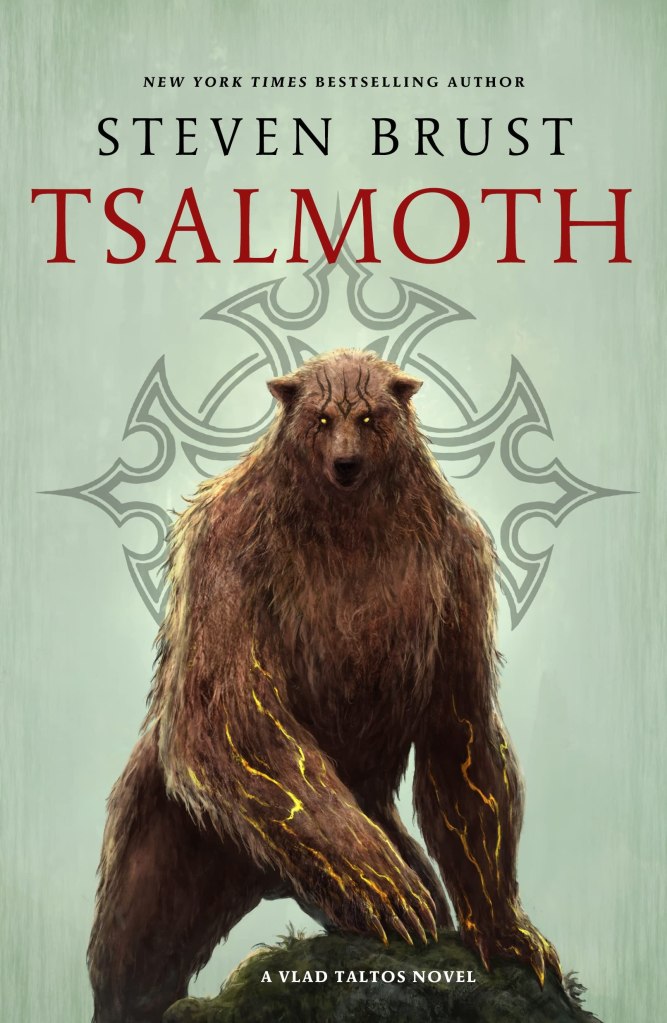
In Tsalmoth, all Vlad wants is his eight hundred gold. When an apothecary from the House of the Tsalmoth who owes Vlad money is murdered, Vlad tries to find someone he can collect his money from. This leads him on an increasingly complicated investigation that reveals a number of conspiracies that turn out to originate from the former Tsalmoth Heiress. (A woman who is a complete failure as a Chess Master.)
Chronologically, most of this book takes place after Yendi. (There is an epilog that takes place years in the future, though it’s not clear where in the timeline the point of view is from.) In between Vlad’s attempts to collect his debt, we get to watch Vlad be a giddy doofus because he’s getting married. (While attempting to assure the reader that really, he’s a tough guy! A very dangerous character! Sadly for Vlad, absolutely no one is convinced of this.)
The chapter headings involve Vlad having a lot to say about marriage. He describes the wedding customs of various Houses and also Eastern customs. (Specifically the customs of Fenario.) He talks about the plans he and Cawti are making for the wedding. You the reader, are completely and utterly spoiled for how this marriage ends and if you are anything like me you are staring in abject horror at the train wreck you know is going to happen. Needless to say this book is a terrible place to start the series from.
A few things we learn: We learn the reason behind Vlad’s recurring memory problems that have been mentioned here and there in the series. We also get the story for the framing element of “Vlad is literally telling someone this story, and they are recording it,” that is present in the series. (There is a connection between the memory problems and the recordings.)
(Also: Devera cameo!)
A lot of the humor fell down in this one, but I think it was somewhat deliberate. Brust is making it clear that the seeds of the eventual end of Vlad and Cawti’s marriage were there from the beginning. This tactic is extremely effective but it does not make Vlad a particularly sympathetic character.
I did like this book, though I found it difficult to get into. (The future trainwreck was just too much for me. Also, the deliberate “yes, Vlad is not as funny as he thinks he is,” was a little off putting.) Tsalmoth is well worth reading if you are a long time fan of the series.


Leave a comment