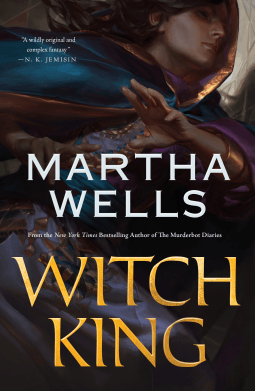
One of the things I thought was interesting about Witch King was the magic systems and how they echo the underlying themes of the novel. Some of the themes addressed are trauma, PTSD, and the situations that created the trauma and PTSD. (A horrifying genocidal war that wiped out most of the population of the main character’s part of the world and did who knows how much damage to the rest.) Other themes related to the found family trope and making moral choices when you are in an utterly desperate situation.
In Witch King, there are at least three (or more) interrelated magical systems. (This is always fun. It is really rare for a fantasy to have more than one cosmology in its magical system. The concepts are usually fairly universal. For example: a fantasy might use Western-based magical systems, and have that be universal even though Asian and African systems and concepts should be very different but for some reason aren’t being treated as distinct from the Western style or each other. A second-world fantasy example is Anne Bishop’s various fantasy series which usually has only one magic system per series.)
One magical system is related to Demons and Witches. (Note: Not Christian cosmological definitions of the same, but their own thing.) Kai is a demon, and his people have a long-standing treaty/kinship alliance with a human nation. Demons live in an adjacent reality but were raiding in the reality where the humans lived. Kai’s (human) grandmother brokered a marriage alliance with a demon noble and ended the war with a system of fosterage where demons would take over the bodies of humans who have died of natural causes. (Specifically and only natural causes, and never to a living person. To do otherwise is considered deeply taboo and horrifying.)
The bodies that the demons take over change/mutate radically over time. Demons do not like running water/rain because it blocks their powers and they can kill with a touch, draining their victim’s life energy. The offspring of a demon and a human is a Witch. Witches have a more elemental form of magic and will have a variety of powers based on whatever element they’re attuned to. Witches and Demons both are organized by lineages and acknowledge their kinship with each other in a variety of ways.
The Immortal Blessed (who are humans) have a magical system that seems to involve a kind of generational power sink that the Blessed draw from. There weren’t a lot of details about where the power was coming from–I am not sure Kai cared beyond “I want these people nowhere near me except for like two of them because they are the only two I consider my family/allies.” The Blessed do not like demons or Witches very much either! (A major problem on one side of the issue is that the Blessed don’t really understand the nature of Demon abilities and find them unnatural. Also, the Blessed had been pressured to ally with the Hierarchs so Kai mostly knew them as enemies because they were very late to join the alliance against the Hierarchs.) Kai very much assumes any encounter with a Blessed may possibly result in his death (except for his two friends, whom he considers to be family.) Anyway, this kind of magic also works transformations on the body over time. The Blessed are all more or less connected to each other via their power source and draw from it to do their magic.
The Hierarch magical system is…just really nasty and full of body horror. Like the Blessed, the Hierarchs use a power sink! However, the power source is based on the energy generated from pain and emotional distress. Fun times! This is exactly the kind of magical system you come up with if you have a hard time understanding or caring that other people are people! The Hierarchs (and the “expositors” who serve them) are genocidal imperialists who enslave other magic users to use them as batteries. (They are called “familiars.”) They also create horrifying constructs called “amalgams” out of the bits and pieces of their slaves. They are kind of horribly nasty and their methods have been super successful up until they reach the end of the world where Kai lives. (And even then they continue to be super successful until a prince named Bashasa Calis decides to help the demons who are being slowly tortured to madness and death in the Hierarch’s main palace. The dude’s first rescue was Kai, who was apparently the right size to sneak out of the horrible torture room where the demons were being kept on display because Hierarchs are classy like that.)
Then we have Kai. Again, Kai is a demon and at first, is mostly using his own magic the way he is used to using it. Then his current body dies during an attempt to assassinate a Hierarch. He instinctively does something he is absolutely not supposed to do, because of the taboo and jumps to a living person, who is an expositor. So now Kai knows how to be an expositor, and theoretically, he could use the power in the Hierarchs well, but he decides he’s not going to do that because he is noping out of the pain and misery fun times gang.
Now, Kai at this point is a traumatized wreck. A desperate, angry traumatized wreck. Who is full of pain both emotional and physical. He is also full of knowledge of what he can do with that power, so he uses it against the Hierarchs and their minions. (Freaking everyone out. And continuing to freak everyone out because he will stab himself to get a power boost.) Our boy has solved the ethical dilemma of the Hierarch magical system by using his own pain and grief, instead of someone else’s. (And frankly, I think that’s beautiful.) This weaponized trauma seems to be largely why Kai is not crippled by his PTSD (which I feel he does have). He is literally able to burn through it by using it against the people responsible for the trauma in the first place–it is absolutely horrifying, but it seems to work for him! (Note: we’re not suggesting it’s a healthy coping mechanism he is doing a lot of self-injury here and that’s really not a great thing. On the other hand, he’s literally processing his trauma.)
Another aspect of the story that I enjoyed/found interesting is the very strong found family vibe. Kai has family, which he acquires after the destruction of his people, and after being blocked off from returning to the “underearth,” which is the alternate world where he comes from. Kai ends up having a strong and complicated relationship with that first desperate coalition formed by the prince. The prince has allied himself with an Immortal Blessed who is trying to save the life of her little brother (who was scheduled to be turned into a horrifying zombie priest puppet for the Hierarchs) and a Witch. Kai ends up trauma bonding with these people, and he is very determined to protect and take care of them.
In comparison (and contrast) we have Kai’s birth family who really don’t understand what’s going on with Kai. From their perspective, they don’t have a lot of interest anymore in the “upper world” because early on, the Hierarchs cut off almost all the connections between the underearth and the upper world. The demons have very much retreated from wanting anything to do with the upper world because the war was so horrific and many demons ended up being permanently killed when their true bodies were destroyed. Kai’s mother would very much like Kai to come home, settle down and get married/have kids. Kai is very much not interested! He has a family and doesn’t want to return to underearth in any permanent way. Also, there’s the tiny problem where his original body was destroyed.
(Kai’s mom does not care and thinks he’s being overdramatic. Kai feels he has a right to be since dramatic things keep happening to him. He has such a pissy teen/equally pissy parent relationship with his mother. It is both funny and awful because their relationship is so messy and dysfunctional. They all need so much therapy/family counseling. )
I really loved the familial interactions Kai has both with his human family and with his bio family. He regards Ziede as an older sibling, and he ends up with a very close relationship with Bashasa, after initial suspicion on his part. Then there’s the Immortal Marshal Tahren, who ends up in a romantic relationship with Ziede, and his older brother/little brother vibe with Tahren’s little brother Dahin. He should be allowed to stab his aunt. You will know why when you get to that part. Kai, let him stab his auntie. She needs stabs.
The underlying theme seems to be the loyalty of found family, while still being worried about possible betrayal. (A continuing fear of Our Protagonist, as he has been betrayed multiple times by people he should have been able to trust.) The novel is also in a sense about recovery from trauma, and learning to trust again (while also having a plot concerning Our Protagonist trying to find out who killed him and why). It’s an interesting mix of theme and plot on a number of levels.


Leave a comment